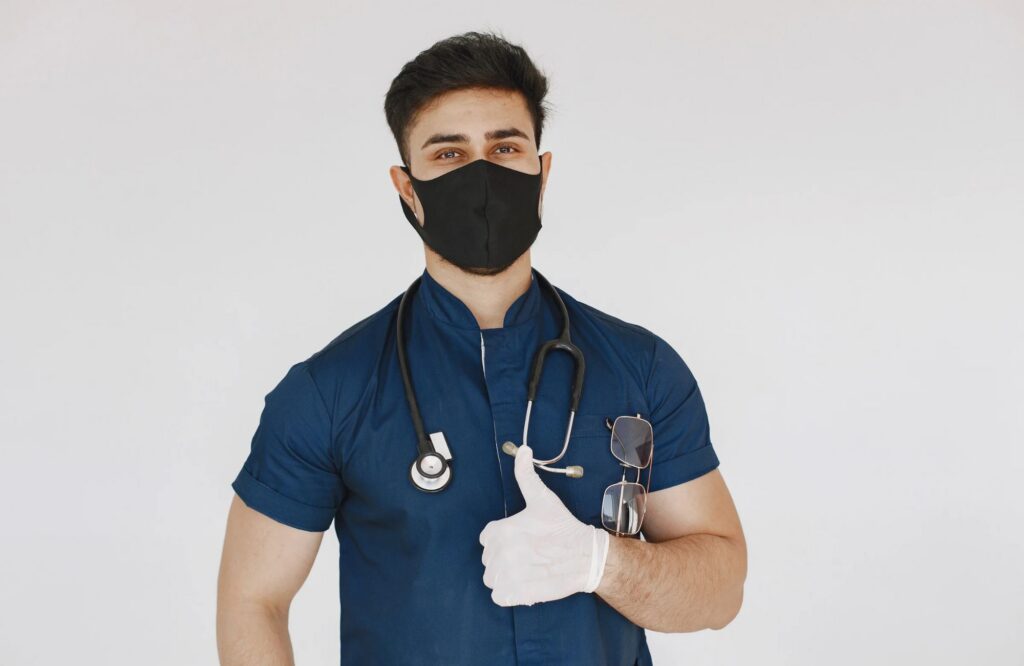
Correctional nurse jobs let registered nurses (RNs) and licensed practical nurses (LPNs/LVNs) care for patients in jails, prisons, and detention facilities. The work includes health screenings, medications, chronic disease treatment, mental health support, and emergencies. To qualify, you need the right nursing license, relevant clinical skills, and any training required by the employer.
These positions offer a different work setting from a hospital, but the duty to give safe, respectful patient care stays the same. Before applying, it helps to understand how facilities differ, what pay figures mean, and which security procedures protect nurses. You should also know what to ask about staffing, scheduling, and support during a shift.
What Do Correctional Nurses Do?
Correctional nurses provide primary care, preventive care, urgent assessments, and ongoing treatment to people in custody. They work with physicians, behavioral health clinicians, correctional officers, and other medical staff. Nurses have a crucial role in recognizing health problems early, making clinical decisions within their license, and helping patients access needed services.
Common duties include:
- Intake screening: Review medical history, current medications, injuries, withdrawal symptoms, and urgent mental health concerns.
- Daily care: Give ordered medications, check vital signs, treat wounds, and document each patient encounter.
- Chronic disease care: Monitor patients with diabetes, asthma, high blood pressure, or other long-term conditions.
- Behavioral health care: Recognize signs of self-harm, psychiatric crises, or substance use disorder and contact qualified clinicians.
- Emergency response: Assess acute symptoms, begin care within nursing scope, and arrange physician review or hospital transfer when needed.
The CDC’s correctional health recommendations address screening, vaccination, and treatment during intake and incarceration. Nurses also develop care plans and communicate with a multidisciplinary team. The NCCHC recognizes access to health care as a constitutional right for people in custody.
What makes the job different? A nurse may need to request an escort before seeing a patient in another housing area. A medication round can pause during a security lockdown. Good assessment and decision-making skills matter because clinical care must fit the facility’s access rules without losing sight of patients’ needs.
Where Can You Find Correctional Nurse Jobs?
Correctional nursing positions are available through county jails, state prison systems, federal facilities, juvenile detention centers, and private companies that provide correctional health services. The setting affects patient needs, schedules, and who employs you. Review the facility and employer, not just the job title.
| Setting | Common Nursing Focus | What to Check |
| County jail | New admissions, withdrawal screening, urgent assessments, medication continuity | Intake volume, overnight coverage, emergency transport |
| State or federal prison | Chronic conditions, scheduled appointments, preventive care, acute episodes | Infirmary services, physician access, specialty referrals |
| Juvenile detention | Adolescent health, behavioral health, trauma-informed care | Youth-specific training and safeguarding procedures |
| Contract or travel position | Facility-specific staffing needs and assigned clinical duties | Orientation, contract length, cancellation terms, benefits |
The Bureau of Justice Statistics reported 7.9 million local jail admissions from July 2023 through June 2024. Its September 2026 report also found that people age 65 or older in local jails increased from 7,400 in 2020 to 13,300 in 2024. This creates a mix of intake and ongoing care needs.
Jobs may be permanent, part-time, or temporary. Some per diem or PRN shifts offer flexibility, but benefits vary. Travel assignment lengths vary by employer and facility. Check the specific posting for contract dates, extension options, and cancellation terms.
How Much Do Correctional Nurse Jobs Pay?
Correctional nurse salaries depend on RN or LPN licensure, location, experience, facility type, and shift. There is no single reliable national wage figure that covers only correctional nurses. Government wage data offer a benchmark; correctional job announcements show employer-specific pay.
The U.S. Bureau of Labor Statistics reported a $97,550 median annual RN wage in May 2025. Its LPN/LVN median was $64,400. Neither figure represents correctional nurses alone.
What Do Actual Correctional Nursing Offers Look Like?
These examples come from Boulder County’s 2026 corrections nurse announcement and Fairfax County’s 2026 Correctional Health Nurse I announcement. They illustrate advertised compensation from specific employers, not a national salary survey or guaranteed offers.
| Employer and Role | Advertised Compensation | Important Detail |
| Boulder County, Colorado, jail RN | 39.21–47.82/hour hiring range | Additional $7/hour correctional specialty pay |
| Boulder County jail LPN | 26.50–32.33/hour hiring range | Additional $5/hour specialty pay |
| Fairfax County, Virginia, correctional health nurse | 70,149.87–122,762.22/year | Annual salary range, not a guaranteed offer |
Boulder County also listed an extra 5–6 per hour for nights and $2 per hour for weekends. For a concrete comparison, Boulder’s $39.21 RN hiring rate plus its $7 specialty premium equals $46.21 an hour. At 36 paid hours weekly for 52 weeks, that is $86,505.12 gross, before other premiums or overtime. This is an illustration, not a promised salary.
Check the full package: health insurance, dental insurance, retirement, paid leave, shift premiums, and overtime rules. A travel assignment may advertise higher weekly compensation but include housing payments or reimbursements. Day-one insurance is employer-specific, not standard for every travel position.
Are Correctional Nursing Jobs Safe?
Correctional facilities use controlled access, security checks, and correctional officers to manage movement and protect staff. Those measures do not remove every risk. Nurses may face aggression, infectious disease exposure, emergencies, and pressure from short staffing. Safety should be a priority when comparing facilities.
OSHA identifies workplace violence as a risk in health care and recommends prevention programs, training, and clear reporting steps. The CDC also warns of increased tuberculosis exposure risk in correctional settings, especially where people share airspace. Nurses need protective equipment, exposure procedures, and medical support.
What Should You Ask About Safety Before Accepting a Job?
Use these questions during a facility interview:
- Can I contact correctional officers immediately during a medical emergency or threatening situation?
- Will I be the only nurse on duty, and which physician or RN can I contact for help?
- What happens if a lockdown delays medications or urgent patient assessment?
- How does the team handle bloodborne exposures, tuberculosis screening, and patient transfers?
- What training covers de-escalation, professional boundaries, contraband, and incident reporting?
A 2024 study led by Elizabeth Keller examined a survey of 270 U.S. correctional nurses. Of those, 111 provided written comments about work and personal life. One nurse wrote, “The mandatory overtime is a burden that is hard to bear.” Participants described staffing shortages, schedule strain, and management support as important workplace issues. The survey does not represent every facility, but it highlights questions worth asking.
Professional boundaries and confidentiality matter too. Nurses must make decisions based on clinical needs, follow the applicable privacy rules, and work with security staff without allowing custody procedures to replace medical judgment.
What Qualifications Do Correctional Nurse Jobs Require?
Most correctional nursing positions require completion of an approved nursing program and a current license that permits practice in the job’s state. Employers often request current CPR/Basic Life Support (BLS), assessment skills, and a background check. Details vary across staff, government, and travel roles.
Can RNs and LPNs Both Work in Corrections?
Yes. Registered nurses may assess patients, coordinate care plans, and lead clinical responses within their state scope of practice. Licensed practical nurses and licensed vocational nurses also provide important patient care, such as medication administration and monitoring, within their own scope and supervision rules. A facility’s job posting should explain which tasks belong to each position.
Nurses planning to work across state lines should check the Nurse Licensure Compact rules. A multistate license can permit practice in participating states when the nurse meets compact requirements; it does not automatically cover every state or every position.
Is Correctional Health Certification Required?
Specialty certification can support professional growth, but it is not a universal requirement for a first correctional job. The National Commission on Correctional Health Care now offers CCHP-N, which replaced its older CCHP-RN credential and includes eligible RNs, LPNs, and LVNs.
For CCHP-N, applicants must already hold CCHP, have an unrestricted nursing license, complete the equivalent of two years of full-time licensed nursing practice, and document 2,000 hours of correctional practice in the preceding three years. These are specialty certification requirements, not rules for every new hire.
Some positions prefer emergency, medical-surgical, or behavioral health experience; travel roles often want recent independent clinical experience. Others accept nurses without correctional experience. Distinguish required from preferred experience, and ask about orientation.
How Do You Apply for Correctional Nurse Jobs?
Start with the type of facility and nursing license you have, then search official correctional department and county hiring channels for available positions. Check each job’s qualifications, pay, location, clearance, and shift. Public employers may require more than a resume and interview.
- Choose a role. Search for correctional RN, jail nurse, prison nurse, correctional LPN, or correctional health nurse positions in your preferred area.
- Check official hiring channels. Review county sheriff or public health departments, state corrections agencies, and Federal Bureau of Prisons nursing hiring information. Federal openings generally route through USAJOBS.
- Match the requirements. Confirm your license, BLS status, clinical background, work authorization, and any state-specific rules.
- Prepare a focused application. Describe triage, medication safety, assessment, crisis response, documentation, and teamwork with clinicians. Use specific duties from your real experience.
- Complete screening and orientation. Follow instructions for background checks, facility access, clinical training, and security procedures before your first independent shift.
A useful 2026 example: Boulder County’s September 15 correctional nurse announcement required a Colorado nursing license, assessment experience, and a background investigation, drug screen, and polygraph. It also said applicants must complete the full application because a resume alone would not count. A missed form can prevent an otherwise qualified candidate from advancing.
Before you accept an offer, ask a recruiter or nurse manager about staff coverage, required overtime, orientation length, cancellation rules, and pay for nights or weekends. Keep the posting and written offer for comparison.
Is Correctional Nursing a Good Career Choice?
Correctional nursing can be a good fit for nurses who value varied clinical work, independent assessment, and a direct impact on patients with limited outside access to care. The role can also bring demanding schedules, stressful events, and security restrictions. The best choice depends on your skills, support needs, and the conditions at the specific facility.
One important difference from a hospital is how nurses coordinate with custody staff. A patient may need urgent evaluation while an area is temporarily inaccessible. The nursing team must communicate the medical priority, follow safety procedures, and arrange appropriate care or transfer. Correctional services and healthcare staff have different duties, but both affect how quickly patients receive treatment.
The work may strengthen assessment, communication, crisis response, and behavioral health skills. Experienced correctional healthcare professionals can seek charge nurse, nurse educator, quality improvement, or management positions. Some also build specialized knowledge in substance use treatment, infection prevention, or chronic disease management.
There are practical trade-offs. A higher hourly rate may come with rotating shifts, required overtime, a longer commute, or fewer benefits. With poor staffing and little recovery time, this can contribute to nurse burnout. Ask the hiring manager how the department handles meal breaks, sick calls, emergencies, and schedule changes. A supportive medical team and clear clinical escalation process are stronger signs of a suitable job than salary alone.
Conclusion
Correctional nurse jobs offer essential patient care in secure settings. Pay, duties, and safety support vary across facilities. Confirm licensing and experience requirements, compare total compensation, and ask about staffing before accepting a role. These steps can help you choose work that fits your skills and goals.
At CTRL+Shift, we connect healthcare professionals with flexible per diem opportunities at participating facilities. Our platform helps eligible nurses explore available shifts that match their qualifications and schedules, although correctional-specific openings should be confirmed separately. Contact CTRL+Shift about available per diem RN shifts and review the facility details before choosing an opportunity.